
İçindekiler Tablosu
For an oil immersed power transformer, this guide examines configuration choices and project requirements. Use the following checks to prepare a project-specific specification, with operating assumptions and unresolved interfaces identified for engineering review.
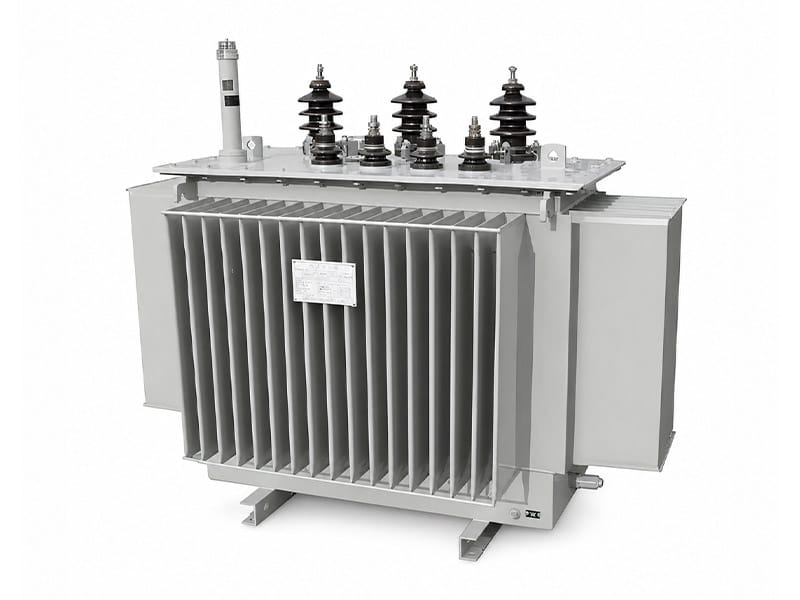
Use an approval sequence that protects interfaces
Selection of an oil immersed power transformer should progress from duty definition to technical clarification, approved drawings and manufacturing release. Put the utility or owner review at the appropriate point. Late changes to voltage, terminal arrangement or enclosure can ripple into cables, foundations and control logic.
Set milestones for the supplier data that other disciplines need. Require a final configuration list and a controlled drawing index at handover. This creates a practical path from an early quotation to an installable product. An accepted commercial offer should not be mistaken for approval of every technical interface.
Define the real installation before requesting a price
A productive review of an oil immersed power transformer starts with a concise project brief: location, operating objective, voltage, demand or energy profile, installation environment and required interfaces. Identify the data already confirmed and the assumptions still under review. An early quotation can help compare configurations, but its conditions need to be retained through the design process.
In the review of an oil immersed power transformer, add the single-line diagram, layout and acceptance requirements as they become available. Assign each open item to the owner, engineer, utility or supplier. This gives the technical discussion a concrete direction and reduces the risk of different parties designing around different assumptions. The final procurement package should use one approved configuration and document index.
Tap positions and voltage regulation
An off-circuit tap changer requires the operating conditions and isolation procedure specified by the manufacturer. An on-load tap changer is a different assembly with its own switching duty, controls and maintenance requirements. For an oil immersed power transformer, write the required regulation range, step size, control mode and permitted operating conditions rather than using the word adjustable as a complete specification.
In the review of an oil immersed power transformer, the utility voltage envelope and the required load-bus voltage should drive the tap discussion. Include seasonal network variation, feeder drop and any parallel-transformer arrangement. Decide who owns regulator settings and how local and remote commands interact. The delivery package should include a tap-position schedule that connects the physical mechanism, nameplate and control indications.
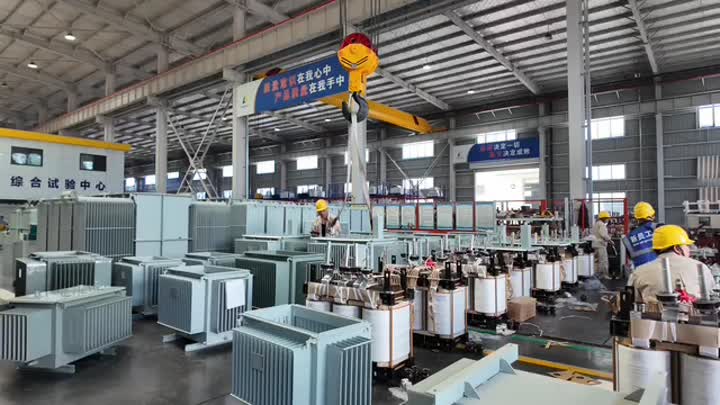
An inspection baseline for long-term maintenance
Commissioning records for an oil immersed power transformer create the reference against which later changes can be assessed. Maintain a serial-number-linked file containing approved drawings, test reports, protection settings and initial condition measurements. The equipment owner should establish inspection frequency using the manufacturer instructions, environment, load duty and applicable maintenance program. A universal calendar interval is rarely a sufficient plan.
In the review of an oil immersed power transformer, trend observations rather than treating each reading in isolation. A change in noise, loading, temperature or leakage may justify further investigation, but diagnosis requires context and qualified review. Record repairs, fluid work and accessory replacements in the same equipment history. The useful output is a traceable decision about condition and service, not a folder of unconnected readings.
Transport condition and receipt inspection
The handling plan for an oil immersed power transformer starts with the shipping configuration. Distinguish shipping mass from operating mass, and confirm which radiators, bushings or accessories travel separately. Ask for lifting points, center-of-gravity information, transport restrictions and storage instructions. These are procurement deliverables because changes can affect crane selection, road access and the foundation program.
In the review of an oil immersed power transformer, at receipt, compare the serial number and packing list with the purchase order. Record visible damage, leakage, loose accessories and any specified transport indicators before moving the unit into storage. Inspection and electrical checks must follow the approved manufacturer procedure. A clean exterior does not establish internal condition, and a receiving photograph cannot replace the documented acceptance process.
Match the application to its operating envelope
The application review for an oil immersed power transformer should identify how power flows, which loads or sources are connected and what happens during abnormal operating states. A familiar industry label does not define the entire duty. Gather the relevant load profile, environmental conditions and continuity requirements before deciding that a product family fits.
In the review of an oil immersed power transformer, describe the limits as carefully as the intended use. Identify conditions requiring a different configuration, additional equipment or further engineering review. The supplier should receive the application information in a structured data sheet. This turns a broad use-case discussion into requirements that can be checked in a quotation.
Identify tradeoffs that affect the installation
Different configurations of an oil immersed power transformer can change footprint, cooling, access, protection and auxiliary supply requirements. Compare the installed arrangement, including the building or foundation work. A compact product may need additional service space; a higher-rated configuration may introduce cooling dependencies.
In the review of an oil immersed power transformer, ask suppliers for comparable general arrangements and configuration-specific data. Keep optional features separate from the base offer and identify any consequence for acceptance testing. The comparison should help the reader prepare a short list and a clarification schedule rather than encourage selection from a label alone.
Review tests and design evidence before production
For an oil immersed power transformer, the inspection plan should connect manufacturing stages to acceptance evidence. Establish material records, in-process checks and final tests with appropriate hold or witness points. Distinguish a test facility capability from a commitment to perform a particular test on the ordered unit.
In the review of an oil immersed power transformer, agree the treatment of nonconformities and design changes. The buyer should know when approval is required and what supporting evidence accompanies a proposed correction. Final reports should identify the serial number and test conditions. An audit becomes useful when it leads to a clear inspection and documentation plan for the actual order.
A transparent three-phase screening example
For a hypothetical 1600 kVA, 10/0.4 kV three-phase configuration, nominal line current is I = S / (√3 × V). The calculated currents are about 92.4 A on the 10 kV side and 2,309.4 A on the 0.4 kV side. The lower voltage is an explicit example assumption unless it appears in the approved data sheet. These figures help frame a discussion of an oil immersed power transformer; they are not a Huayu product test result.
At an illustrative 65% apparent-power loading and 0.90 power factor, active output would be 1600 × 0.65 × 0.9 = 936 kW. That does not determine a permissible overload or establish thermal suitability for an oil immersed power transformer. Review temperature, cooling, waveform, voltage behavior and contingency conditions separately. Replace the example values with the approved system data before selecting cables, protection or a final configuration.
Compare the required evidence before choosing
| Decision for an oil immersed power transformer | Compare on the same basis | Evidence to request |
|---|---|---|
| Electrical duty | kVA, voltage ratio, frequency and connection | Approved data sheet and single-line diagram |
| Thermal duty | Cooling stage, losses and ambient conditions | Guaranteed values and thermal basis |
| Installation | Outline, terminals, mass and access | General arrangement and site layout |
| Acceptance | Tests and permitted deviations | Inspection plan and serial-number-linked reports |
Prepare the project enquiry and approval package
For an oil immersed power transformer, review the 30 kVA 10 kV Yağla Daldırılan Güç Trafosu catalogue entry and the related power solution. Request a configuration-specific response; a family illustration does not establish the parameters of a customized unit.
The IEC 60076-1 power transformer scope supports the technical scope discussion for an oil immersed power transformer. It is a reference, not a claim of product certification.
Send the oil immersed power transformer data sheet, single-line diagram, operating profile, location and delivery requirements to the Huayu enquiry team. Ask for rated values, a deviation schedule and the agreed acceptance documents.
Frequently asked questions
What information is needed to assess an oil immersed power transformer?
For an oil immersed power transformer, provide the load or source profile, voltage, frequency, operating modes and installation conditions. Include a single-line diagram and the required acceptance basis. The supplier can then review a specific configuration and identify missing inputs rather than assume that a catalogue label defines the duty.
Which operating conditions should be defined for an oil immersed power transformer?
Selection of an oil immersed power transformer should progress from duty definition to technical clarification, approved drawings and manufacturing release. Put the utility or owner review at the appropriate point.
What installation and delivery information is needed for an oil immersed power transformer?
A productive review of an oil immersed power transformer starts with a concise project brief: location, operating objective, voltage, demand or energy profile, installation environment and required interfaces. Identify the data already confirmed and the assumptions still under review.
Which voltage regulation details need confirmation for an oil immersed power transformer?
An off-circuit tap changer requires the operating conditions and isolation procedure specified by the manufacturer. An on-load tap changer is a different assembly with its own switching duty, controls and maintenance requirements.
What access and maintenance records are needed for an oil immersed power transformer?
Commissioning records for an oil immersed power transformer create the reference against which later changes can be assessed. Maintain a serial-number-linked file containing approved drawings, test reports, protection settings and initial condition measurements.