
Table of Contents
For a Dry-Type Power Transformer, this guide examines configuration choices and project requirements. Use the following checks to prepare a project-specific specification, with operating assumptions and unresolved interfaces identified for engineering review.
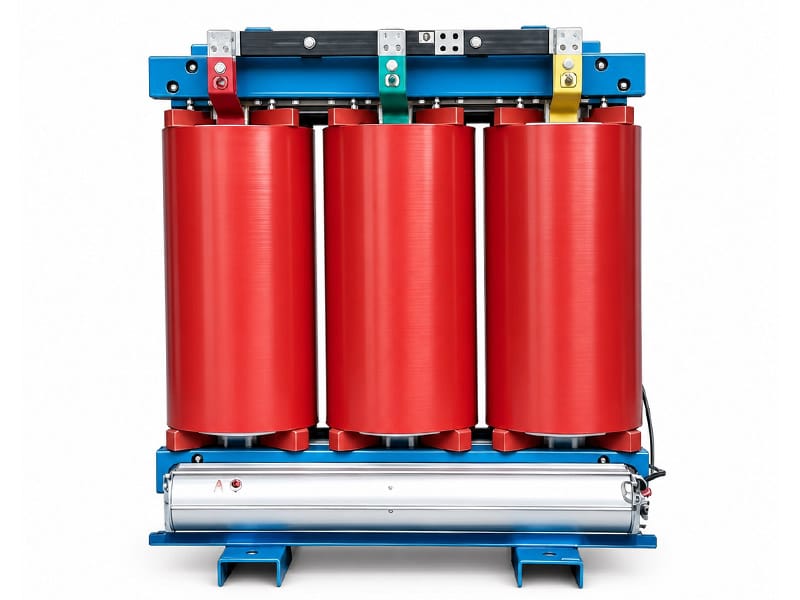
Use an approval sequence that protects interfaces
Selection of a Dry-Type Power Transformer should progress from duty definition to technical clarification, approved drawings and manufacturing release. Put the utility or owner review at the appropriate point. Late changes to voltage, terminal arrangement or enclosure can ripple into cables, foundations and control logic.
Set milestones for the supplier data that other disciplines need. Require a final configuration list and a controlled drawing index at handover. This creates a practical path from an early quotation to an installable product. An accepted commercial offer should not be mistaken for approval of every technical interface.
Define the real installation before requesting a price
A productive review of a Dry-Type Power Transformer starts with a concise project brief: location, operating objective, voltage, demand or energy profile, installation environment and required interfaces. Identify the data already confirmed and the assumptions still under review. An early quotation can help compare configurations, but its conditions need to be retained through the design process.
Add the single-line diagram, layout and acceptance requirements as they become available. Assign each open item to the owner, engineer, utility or supplier. This gives the technical discussion a concrete direction and reduces the risk of different parties designing around different assumptions. The final procurement package should use one approved configuration and document index.
Maintenance access without disturbing windings
A maintenance plan for a Dry-Type Power Transformer should follow the supplied instructions for isolation, inspection and cleaning. Do not generalize an industrial cleaning method to exposed insulation or resin surfaces. The manufacturer should identify permitted methods, inspection points and conditions that require specialist assessment. Access to cooling passages and terminals should be demonstrated on the installation layout.
Preserve commissioning measurements and a record of operating load, temperatures and environmental observations. Changes in contamination, ventilation or room use can alter the equipment duty years after installation. Review these changes before adding load. A routine inspection gains value when it connects the current condition with the original design assumptions and previous observations.
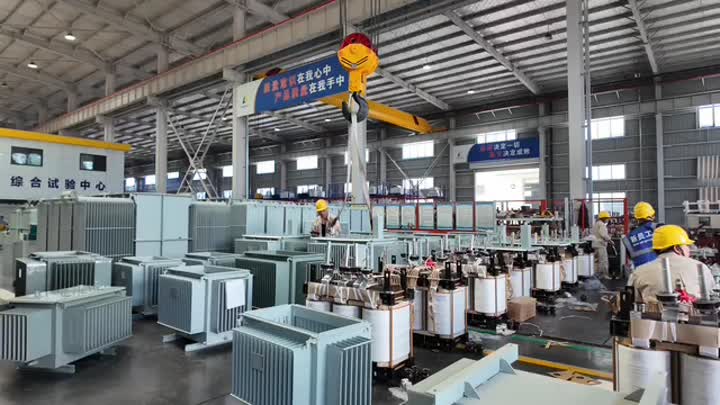
Nonlinear loads and winding heating
UPS rectifiers, variable-speed drives and other electronic equipment can change the current waveform. The design review of a Dry-Type Power Transformer should therefore include the load spectrum or manufacturer-supported harmonic assumptions. RMS current, additional winding losses and neutral loading need appropriate assessment. A power factor value alone does not describe the entire electrical duty of a nonlinear load.
Obtain the connected equipment schedule and distinguish normal, bypass, starting and recovery states. Ask the transformer supplier to state how the proposed construction is evaluated for the specified duty. Keep any derating or additional thermal allowance visible in the bid comparison. Generic claims about handling harmonics are less useful than a documented assessment against the actual load requirements.
The winding enclosure and room cooling
A dry-type transformer rejects heat to surrounding air through its designed cooling paths. For a Dry-Type Power Transformer, the room is part of the thermal system: inlet air temperature, outlet path and recirculation can limit performance. Confirm whether the offered rating applies to an open unit or to the specified enclosure. A cabinet that improves ingress protection can change airflow and needs to be included in the thermal assessment.
In the review of a Dry-Type Power Transformer, coordinate the enclosure outline with ventilation openings, cable routes and access aisles. Do not design the room using kVA alone; use the guaranteed losses and auxiliary heat loads at the intended operating condition. Ask the manufacturer to identify permissible inlet conditions and any rating changes for enclosure, altitude or ambient temperature. Leave those assumptions explicit in the specification.
Translate promises into deliverables
The procurement file for a Dry-Type Power Transformer should convert broad statements into dated deliverables. List approved drawings, inspection and test plans, test reports, packing documents and installation instructions. Ask which records are serial-number-specific and which are general design evidence. The contract should identify the review time and approval responsibility for each item.
In the review of a Dry-Type Power Transformer, delivery dates should connect to drawing approval, purchased components and testing rather than an unexplained lead-time claim. Discuss the consequence of a delayed interface decision. Include spare parts and support terms explicitly. Website descriptions can guide questions, but only the agreed quotation and contract establish the commitments for the order.
Identify tradeoffs that affect the installation
Different configurations of a Dry-Type Power Transformer can change footprint, cooling, access, protection and auxiliary supply requirements. Compare the installed arrangement, including the building or foundation work. A compact product may need additional service space; a higher-rated configuration may introduce cooling dependencies.
In the review of a Dry-Type Power Transformer, ask suppliers for comparable general arrangements and configuration-specific data. Keep optional features separate from the base offer and identify any consequence for acceptance testing. The comparison should help the reader prepare a short list and a clarification schedule rather than encourage selection from a label alone.
Set guarantees that can be checked
A contract for a Dry-Type Power Transformer should state guaranteed values, conditions, tolerances and the agreed acceptance method. Ask which values are typical, which are calculated and which are guaranteed. The distinction matters when a product page describes an entire series but the order covers one configuration.
In the review of a Dry-Type Power Transformer, agree how test results will be reported and how a deviation is handled. Keep the final data in the equipment record so future operating assessments use the delivered design. Efficient operation also depends on loading, cooling and controls after installation. The procurement decision and the operating plan should use the same assumptions.
A transparent three-phase screening example
For a hypothetical 1000 kVA, 10/0.4 kV three-phase configuration, nominal line current is I = S / (√3 × V). The calculated currents are about 57.7 A on the 10 kV side and 1,443.4 A on the 0.4 kV side. The lower voltage is an explicit example assumption unless it appears in the approved data sheet. These figures help frame a discussion of a Dry-Type Power Transformer; they are not a Huayu product test result.
At an illustrative 65% apparent-power loading and 0.90 power factor, active output would be 1000 × 0.65 × 0.9 = 585 kW. That does not determine a permissible overload or establish thermal suitability for a Dry-Type Power Transformer. Review temperature, cooling, waveform, voltage behavior and contingency conditions separately. Replace the example values with the approved system data before selecting cables, protection or a final configuration.
Compare the required evidence before choosing
| Decision for a Dry-Type Power Transformer | Compare on the same basis | Evidence to request |
|---|---|---|
| Electrical duty | kVA, voltage ratio, frequency and connection | Approved data sheet and single-line diagram |
| Thermal duty | Cooling stage, losses and ambient conditions | Guaranteed values and thermal basis |
| Installation | Outline, terminals, mass and access | General arrangement and site layout |
| Acceptance | Tests and permitted deviations | Inspection plan and serial-number-linked reports |
Prepare the project enquiry and approval package
For a Dry-Type Power Transformer, review the SCB10 30 kVA Dry-Type Power Transformer catalogue entry and the related power solution. Request a configuration-specific response; a family illustration does not establish the parameters of a customized unit.
The IEC 60076-11 dry-type transformer scope supports the technical scope discussion for a Dry-Type Power Transformer. It is a reference, not a claim of product certification.
Send the Dry-Type Power Transformer data sheet, single-line diagram, operating profile, location and delivery requirements to the Huayu enquiry team. Ask for rated values, a deviation schedule and the agreed acceptance documents.
Frequently asked questions
What information is needed to assess a Dry-Type Power Transformer?
For a Dry-Type Power Transformer, provide the load or source profile, voltage, frequency, operating modes and installation conditions. Include a single-line diagram and the required acceptance basis. The supplier can then review a specific configuration and identify missing inputs rather than assume that a catalogue label defines the duty.
Which operating conditions should be defined for a Dry-Type Power Transformer?
Selection of a Dry-Type Power Transformer should progress from duty definition to technical clarification, approved drawings and manufacturing release. Put the utility or owner review at the appropriate point.
What installation and delivery information is needed for a Dry-Type Power Transformer?
A productive review of a Dry-Type Power Transformer starts with a concise project brief: location, operating objective, voltage, demand or energy profile, installation environment and required interfaces. Identify the data already confirmed and the assumptions still under review.
What access and maintenance records are needed for a Dry-Type Power Transformer?
A maintenance plan for a Dry-Type Power Transformer should follow the supplied instructions for isolation, inspection and cleaning. Do not generalize an industrial cleaning method to exposed insulation or resin surfaces.
How should cooling and ambient conditions be specified for a Dry-Type Power Transformer?
A dry-type transformer rejects heat to surrounding air through its designed cooling paths. For a Dry-Type Power Transformer, the room is part of the thermal system: inlet air temperature, outlet path and recirculation can limit performance.