
Table of Contents
For a pad mounted transformer, this guide examines configuration choices and project requirements. Use the following checks to prepare a project-specific specification, with operating assumptions and unresolved interfaces identified for engineering review.
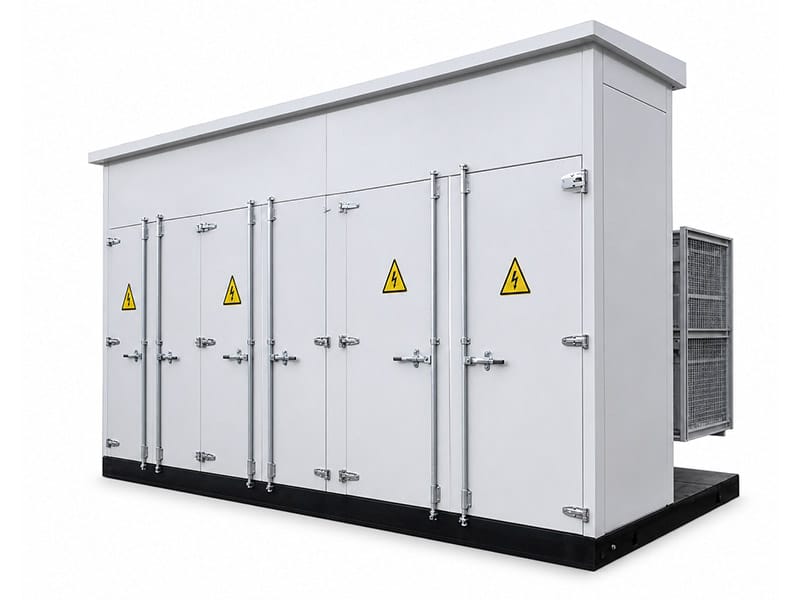
Use an approval sequence that protects interfaces
Selection of a pad mounted transformer should progress from duty definition to technical clarification, approved drawings and manufacturing release. Put the utility or owner review at the appropriate point. Late changes to voltage, terminal arrangement or enclosure can ripple into cables, foundations and control logic.
Set milestones for the supplier data that other disciplines need. Require a final configuration list and a controlled drawing index at handover. This creates a practical path from an early quotation to an installable product. An accepted commercial offer should not be mistaken for approval of every technical interface.
Define the real installation before requesting a price
A productive review of a pad mounted transformer starts with a concise project brief: location, operating objective, voltage, demand or energy profile, installation environment and required interfaces. Identify the data already confirmed and the assumptions still under review. An early quotation can help compare configurations, but its conditions need to be retained through the design process.
Add the single-line diagram, layout and acceptance requirements as they become available. Assign each open item to the owner, engineer, utility or supplier. This gives the technical discussion a concrete direction and reduces the risk of different parties designing around different assumptions. The final procurement package should use one approved configuration and document index.
Renewable generation and bidirectional operation
If a pad mounted transformer connects solar, wind or storage equipment, define the power-flow envelope and converter interface. Export, import, reactive support and reduced-output operation can create different electrical and thermal duties. Provide the inverter or converter characteristics and grid requirements rather than assuming that a standard distribution package is suitable for every generation project.
Controls, protection and metering should support the approved operating modes. Include export limitation, anti-islanding functions where required and the behavior during loss of communications. The complete solution needs coordination with the network operator. A renewable-energy label on a product page is only a starting point for the technical configuration review.
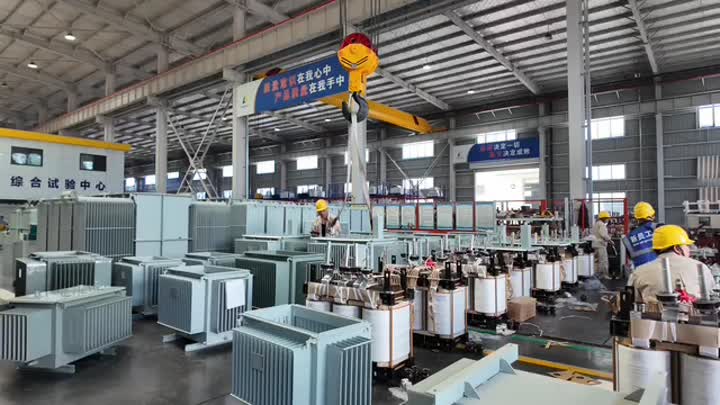
A complete station is an interface package
A compact station combines equipment whose interfaces determine the finished installation. For a pad mounted transformer, define the MV incoming arrangement, transformer duty, LV outgoing circuits, metering and control functions on a single-line diagram. Purchasing the individual components under separate assumptions can leave gaps in fault ratings, terminals or auxiliary power.
Assign responsibility for the integration drawings and verification of the assembled station. Ask whether the quotation covers interconnections, earthing links, internal lighting, ventilation, foundations and external cables. The word integrated does not establish the supply boundary. The buyer needs a coordinated package that can be installed, connected and maintained in its actual location.
Factory integration tests and site acceptance
An assembled station offers opportunities to check interfaces before shipment. The test plan for a pad mounted transformer should cover the relevant component records and the station-level wiring, interlocks, controls and documented verification. Agree what is demonstrated at the factory and what must be verified after transport and installation.
In the review of a pad mounted transformer, at site, the condition of cables, earthing, ventilation and auxiliaries can differ from factory conditions. Establish a clear acceptance sequence and required records before energization. Do not treat successful component testing as proof that the installed station is ready for service. The owner should receive one indexed documentation set connecting component serial numbers with the station configuration.
Convert the short list into a specification
After reviewing types of a pad mounted transformer, write a specification that captures required performance and acceptable alternatives. Include service conditions, interfaces, evidence and exclusions. If more than one construction is permitted, explain how bids will be compared on a consistent basis.
In the review of a pad mounted transformer, resolve terminology early, particularly where regional names describe different arrangements. Ask for diagrams rather than relying on a translated product name. The final purchase should identify the actual configuration, not just the general family used during research. This keeps the classification exercise connected to a practical procurement decision.
Check the interfaces after the preliminary size
Once a pad mounted transformer has a preliminary size, update the interface calculations. Transformer capacity can change LV current and fault duty; a storage power increase can change converter and switchgear requirements. Confirm cables, protective devices, cooling, space and auxiliary supplies against the revised configuration.
In the review of a pad mounted transformer, document the governing assumptions in a design-basis schedule. The supplier needs the same version used by the electrical and civil designers. Keep an approval hold point before manufacturing and before purchasing dependent equipment. The final selection should be traceable to a load case and interface review, rather than only to a rounded capacity number.
Prepare evidence for the actual use case
Ask for documentation showing how a pad mounted transformer is evaluated for the requested conditions. A generic product brochure can establish the family, but it cannot settle every environmental, thermal or system-integration question. Require configuration-specific ratings and a clear deviation list.
In the review of a pad mounted transformer, define factory and site acceptance around the operating objectives. Record the responsibilities for utility approval, civil work and commissioning. At handover, the owner needs the approved configuration and procedures that support the intended application. Useful application guidance ends with a concrete information package for the next design review.
A transparent three-phase screening example
For a hypothetical 800 kVA, 10/0.4 kV three-phase configuration, nominal line current is I = S / (√3 × V). The calculated currents are about 46.2 A on the 10 kV side and 1,154.7 A on the 0.4 kV side. The lower voltage is an explicit example assumption unless it appears in the approved data sheet. These figures help frame a discussion of a pad mounted transformer; they are not a Huayu product test result.
At an illustrative 65% apparent-power loading and 0.90 power factor, active output would be 800 × 0.65 × 0.9 = 468 kW. That does not determine a permissible overload or establish thermal suitability for a pad mounted transformer. Review temperature, cooling, waveform, voltage behavior and contingency conditions separately. Replace the example values with the approved system data before selecting cables, protection or a final configuration.
Compare the required evidence before choosing
| Decision for a pad mounted transformer | Compare on the same basis | Evidence to request |
|---|---|---|
| Electrical duty | kVA, voltage ratio, frequency and connection | Approved data sheet and single-line diagram |
| Thermal duty | Cooling stage, losses and ambient conditions | Guaranteed values and thermal basis |
| Installation | Outline, terminals, mass and access | General arrangement and site layout |
| Acceptance | Tests and permitted deviations | Inspection plan and serial-number-linked reports |
Prepare the project enquiry and approval package
For a pad mounted transformer, review the Intelligence of Secondary Equipment Prefabricated Cabin catalogue entry and the related power solution. Request a configuration-specific response; a family illustration does not establish the parameters of a customized unit.
The IEC 62271-202 prefabricated substation scope supports the technical scope discussion for a pad mounted transformer. It is a reference, not a claim of product certification.
Send the pad mounted transformer data sheet, single-line diagram, operating profile, location and delivery requirements to the Huayu enquiry team. Ask for rated values, a deviation schedule and the agreed acceptance documents.
Frequently asked questions
What information is needed to assess a pad mounted transformer?
For a pad mounted transformer, provide the load or source profile, voltage, frequency, operating modes and installation conditions. Include a single-line diagram and the required acceptance basis. The supplier can then review a specific configuration and identify missing inputs rather than assume that a catalogue label defines the duty.
Which operating conditions should be defined for a pad mounted transformer?
Selection of a pad mounted transformer should progress from duty definition to technical clarification, approved drawings and manufacturing release. Put the utility or owner review at the appropriate point.
What installation and delivery information is needed for a pad mounted transformer?
A productive review of a pad mounted transformer starts with a concise project brief: location, operating objective, voltage, demand or energy profile, installation environment and required interfaces. Identify the data already confirmed and the assumptions still under review.
Which verification evidence should buyers request for a pad mounted transformer?
An assembled station offers opportunities to check interfaces before shipment. The test plan for a pad mounted transformer should cover the relevant component records and the station-level wiring, interlocks, controls and documented verification.
What should be confirmed before ordering a pad mounted transformer?
Confirm the operating envelope, approved configuration, supply scope and acceptance responsibilities for a pad mounted transformer. Keep any remaining assumptions in the deviation schedule and obtain model-specific confirmation.