
جدول المحتويات
For an oil immersed distribution transformer, this guide examines configuration choices and project requirements. Use the following checks to prepare a project-specific specification, with operating assumptions and unresolved interfaces identified for engineering review.
Compare alternatives at the same boundary
For an oil immersed distribution transformer, equivalent scope matters as much as apparently equivalent ratings. State which accessories, controls, interconnections, tests, shipping and site services are included. Compare the same operating conditions and the same acceptance basis. A lower equipment price can be offset by omitted installation work or an interface that another contractor must supply.
In the review of an oil immersed distribution transformer, prepare a clarification list before ranking final bids. Close technical gaps, confirm commercial exclusions and identify long-lead dependencies. If an alternative is proposed, record what changes elsewhere in the project. The owner should approve the full consequence of the alternative, including maintenance and documentation, rather than only the revised item price.
Define the real installation before requesting a price
A productive review of an oil immersed distribution transformer starts with a concise project brief: location, operating objective, voltage, demand or energy profile, installation environment and required interfaces. Identify the data already confirmed and the assumptions still under review. An early quotation can help compare configurations, but its conditions need to be retained through the design process.
In the review of an oil immersed distribution transformer, add the single-line diagram, layout and acceptance requirements as they become available. Assign each open item to the owner, engineer, utility or supplier. This gives the technical discussion a concrete direction and reduces the risk of different parties designing around different assumptions. The final procurement package should use one approved configuration and document index.
Losses under a changing load profile
The economic comparison for an oil immersed distribution transformer should distinguish no-load loss from load loss. No-load loss continues while the transformer is energized; the resistive portion of load loss varies approximately with current squared under comparable conditions. Use the proposed loading profile and the same reference conditions for each bidder. A single efficiency percentage can conceal meaningful differences between lightly loaded and heavily loaded service.
In the review of an oil immersed distribution transformer, for a preliminary annual estimate, sum no-load loss over energized hours and load-dependent loss over each operating interval. Include fan or other auxiliary consumption where applicable. Evaluate capital cost and energy cost over a stated horizon with a stated electricity price. Keep the calculation assumptions visible, because a tariff change or revised duty profile may reverse the economic ranking.
Tap positions and voltage regulation
An off-circuit tap changer requires the operating conditions and isolation procedure specified by the manufacturer. An on-load tap changer is a different assembly with its own switching duty, controls and maintenance requirements. For an oil immersed distribution transformer, write the required regulation range, step size, control mode and permitted operating conditions rather than using the word adjustable as a complete specification.
In the review of an oil immersed distribution transformer, the utility voltage envelope and the required load-bus voltage should drive the tap discussion. Include seasonal network variation, feeder drop and any parallel-transformer arrangement. Decide who owns regulator settings and how local and remote commands interact. The delivery package should include a tap-position schedule that connects the physical mechanism, nameplate and control indications.
Cooling design: ONAN and ONAF duties
ONAN describes oil-natural, air-natural cooling; ONAF adds forced-air cooling. For an oil immersed distribution transformer, record the capacity available in each specified cooling stage, the fan supply and the control logic. A forced-air rating is conditional on functioning auxiliary equipment and its design environment. Do not evaluate only the highest capacity shown in a quotation when the operating plan includes fan failure or loss of auxiliary power.
In the review of an oil immersed distribution transformer, write a cooling contingency into the operating philosophy. Decide which alarms reach the control room, whether load must be reduced after a cooling-stage failure and how maintenance is performed without removing all redundant capacity. During procurement, obtain a fan and radiator arrangement with access space. During acceptance, verify controls against the approved cause-and-effect schedule rather than relying on a generic accessory list.
Identify tradeoffs that affect the installation
Different configurations of an oil immersed distribution transformer can change footprint, cooling, access, protection and auxiliary supply requirements. Compare the installed arrangement, including the building or foundation work. A compact product may need additional service space; a higher-rated configuration may introduce cooling dependencies.
In the review of an oil immersed distribution transformer, ask suppliers for comparable general arrangements and configuration-specific data. Keep optional features separate from the base offer and identify any consequence for acceptance testing. The comparison should help the reader prepare a short list and a clarification schedule rather than encourage selection from a label alone.
Translate promises into deliverables
The procurement file for an oil immersed distribution transformer should convert broad statements into dated deliverables. List approved drawings, inspection and test plans, test reports, packing documents and installation instructions. Ask which records are serial-number-specific and which are general design evidence. The contract should identify the review time and approval responsibility for each item.
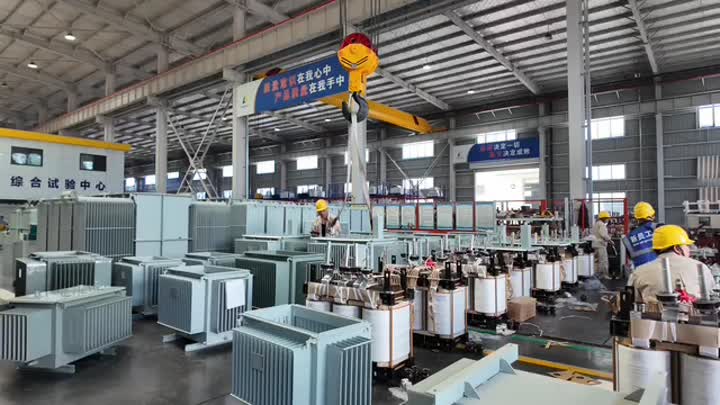
In the review of an oil immersed distribution transformer, delivery dates should connect to drawing approval, purchased components and testing rather than an unexplained lead-time claim. Discuss the consequence of a delayed interface decision. Include spare parts and support terms explicitly. Website descriptions can guide questions, but only the agreed quotation and contract establish the commitments for the order.
Connect ratings to cables and protection
The ratings selected for an oil immersed distribution transformer influence connected equipment and operating limits. Review cable current, fault duty, protective devices and thermal interfaces using the final configuration. A change to one nominal value can alter several dependent calculations, so manage revisions across disciplines.
In the review of an oil immersed distribution transformer, ask the supplier to identify the guaranteed values and tolerances used for system studies. The project team should approve the final data sheet before settings and external equipment are finalized. The rating review is complete when the operating envelope and connected interfaces agree, not when the nameplate matches the purchase-order headline.
A transparent three-phase screening example
For a hypothetical 500 kVA, 10/0.4 kV three-phase configuration, nominal line current is I = S / (√3 × V). The calculated currents are about 28.9 A on the 10 kV side and 721.7 A on the 0.4 kV side. The lower voltage is an explicit example assumption unless it appears in the approved data sheet. These figures help frame a discussion of an oil immersed distribution transformer; they are not a Huayu product test result.
At an illustrative 65% apparent-power loading and 0.90 power factor, active output would be 500 × 0.65 × 0.9 = 292.5 kW. That does not determine a permissible overload or establish thermal suitability for an oil immersed distribution transformer. Review temperature, cooling, waveform, voltage behavior and contingency conditions separately. Replace the example values with the approved system data before selecting cables, protection or a final configuration.
Compare the required evidence before choosing
| Decision for an oil immersed distribution transformer | Compare on the same basis | Evidence to request |
|---|---|---|
| Electrical duty | kVA, voltage ratio, frequency and connection | Approved data sheet and single-line diagram |
| Thermal duty | Cooling stage, losses and ambient conditions | Guaranteed values and thermal basis |
| تثبيت | Outline, terminals, mass and access | General arrangement and site layout |
| Acceptance | Tests and permitted deviations | Inspection plan and serial-number-linked reports |
Prepare the project enquiry and approval package
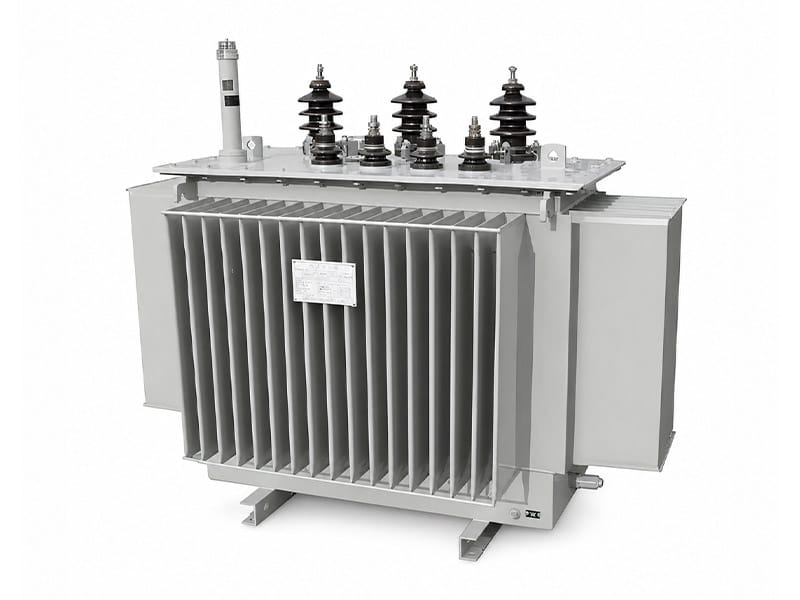
For an oil immersed distribution transformer, review the محول طاقة مغمور بالزيت بقدرة 30 كيلو فولت أمبير 10 كيلو فولت catalogue entry and the related power solution. Request a configuration-specific response; a family illustration does not establish the parameters of a customized unit.
ال IEC 60076-1 power transformer scope supports the technical scope discussion for an oil immersed distribution transformer. It is a reference, not a claim of product certification.
Send the oil immersed distribution transformer data sheet, single-line diagram, operating profile, location and delivery requirements to the Huayu enquiry team. Ask for rated values, a deviation schedule and the agreed acceptance documents.
Frequently asked questions
What information is needed to assess an oil immersed distribution transformer?
For an oil immersed distribution transformer, provide the load or source profile, voltage, frequency, operating modes and installation conditions. Include a single-line diagram and the required acceptance basis. The supplier can then review a specific configuration and identify missing inputs rather than assume that a catalogue label defines the duty.
How should configurations of an oil immersed distribution transformer be compared?
For an oil immersed distribution transformer, equivalent scope matters as much as apparently equivalent ratings. State which accessories, controls, interconnections, tests, shipping and site services are included.
What installation and delivery information is needed for an oil immersed distribution transformer?
A productive review of an oil immersed distribution transformer starts with a concise project brief: location, operating objective, voltage, demand or energy profile, installation environment and required interfaces. Identify the data already confirmed and the assumptions still under review.
How should losses and operating cost be assessed for an oil immersed distribution transformer?
The economic comparison for an oil immersed distribution transformer should distinguish no-load loss from load loss. No-load loss continues while the transformer is energized; the resistive portion of load loss varies approximately with current squared under comparable conditions.
Which voltage regulation details need confirmation for an oil immersed distribution transformer?
An off-circuit tap changer requires the operating conditions and isolation procedure specified by the manufacturer. An on-load tap changer is a different assembly with its own switching duty, controls and maintenance requirements.